
Rump Roast Recipe: How To Make a Tender And Flavorful Roast in a Dutch Oven or Slow Cooker
Here’s the secret to transforming your rump roast into a fork-tender meal you’ll want to make again and again.
I recently purchased a 1/4 cow with one of my daughters, and a rump roast was included. While a rump roast is full of flavor, it’s a tougher, leaner cut that requires a little more skill to make it fall-apart tender. With just a few simple, tangible tips, you can easily turn this cut into a tender roast using only a handful of ingredients.
I’m sharing two ways to make it: my new favorite Dutch oven method (which I think is even better) and the classic slow cooker version.

What is a rump roast?
A beef rump roast (also known as a bottom round roast or round tip roast) comes from the backside of the cow. It’s a lean cut with very little marbling, which means it doesn’t have much fat to keep it moist while cooking. Because of this, it’s typically more affordable, but it does require the right cooking method to make it tender.
What is the difference between a chuck roast vs. a rump roast?
A chuck roast is much fattier and heavily marbled, which gives it a rich roast beef flavor and makes it easier to cook until fork-tender. A rump roast, on the other hand, is significantly leaner. If the fat content of a chuck roast isn’t appealing to you, a rump roast can be a great option, but it needs more care. Since it’s lean, it must be cooked low and slow and given enough liquid to prevent it from drying out.
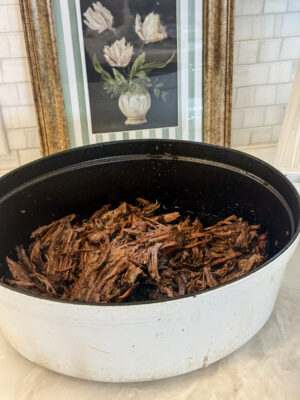
What is the best cooking method for a rump roast recipe?
After consistently making this in the slow cooker, I recently tried it using a Dutch oven. I have to admit, it is my new favorite way!
That said, the slow cooker method works beautifully too, and I have made it that way for a long time. Both methods are included below, with the Dutch oven as my top recommendation and the slow cooker as a great alternate if that is what you have or prefer.
For either method, I highly recommend searing your roast on the stovetop first. This step creates a gorgeous crust on the outside of the meat and adds a ton of flavor. You will never find me skipping it. It is worth the extra effort!
How do I sear a rump roast to perfection?
Heat a large skillet or Dutch oven over medium heat and add enough oil to coat the bottom. While the oil heats, generously season all sides of the roast (including the edges) with Redmond Real Salt’s Wasatch Steak Seasoning and garlic salt, rubbing it in well. (Use code FAMILYSAVVY for a discount if you want to give the seasoning a try!)
Increase to medium-high heat and sear the roast 4–5 minutes per side until a golden crust forms on all sides and edges. If using the slow cooker, transfer the seared roast to the slow cooker. If using the Dutch oven, you’re already in the right pot. One of my favorite things about this method is that you sear and finish the roast in the same pot! (Less cleanup!)
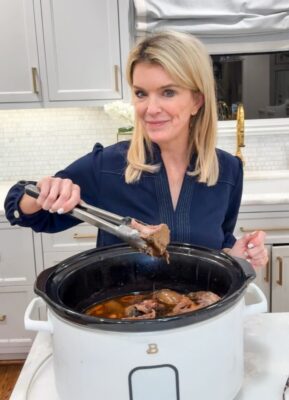
How do you keep a rump roast from drying out?
Dutch Oven Method: Once the roast is seared, pour 2 cups of beef bone broth into the Dutch oven around the roast. Drizzle about 2 tablespoons of Worcestershire sauce over the top, then place butter pieces directly on the roast. I used half a stick, but a whole stick makes it even better. Cover the Dutch oven with its lid and transfer it to a 300°F oven to finish cooking.
Slow Cooker Method: Once the roast is seared and in the slow cooker, pour 2 cups of beef bone broth into the bottom. Arrange carrots, potatoes, and any other vegetables on top of the roast to help keep the meat sitting in the liquid as it cooks. This is key for keeping it moist and tender. Spoon 3–4 tablespoons of garlic and shallot butter over the top and drizzle with Worcestershire sauce.
For a quality beef broth option for either method, I love and recommend Kroma’s 24K Beef Bone Broth. While it is a bit more expensive, one container yields plenty of servings and provides 15g of protein per serving, along with bovine collagen to support gut health, immunity, and digestion.
After shredding, pour an additional 2 cups of bone broth over the meat to keep it moist and extra flavorful.
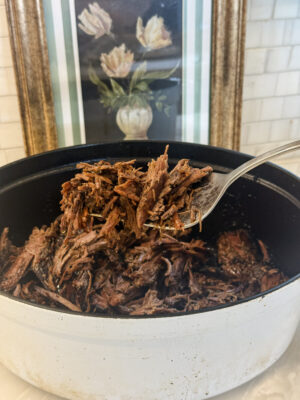
Why is my roast still tough after 4 hours?
Unlike a chuck roast, a rump roast cannot be rushed. While a chuck roast may be tender after about 4 hours, a rump roast needs more time.
- Dutch Oven: Cook covered at 300°F for 6–7 hours.
- Slow Cooker: Cook on low for 7–8 hours.
Either way, the roast will continue to get more tender the longer it cooks. In fact, a rump roast typically needs nearly double the cooking time of a chuck roast to achieve that melt-in-your-mouth texture. Low and slow is the secret every time!
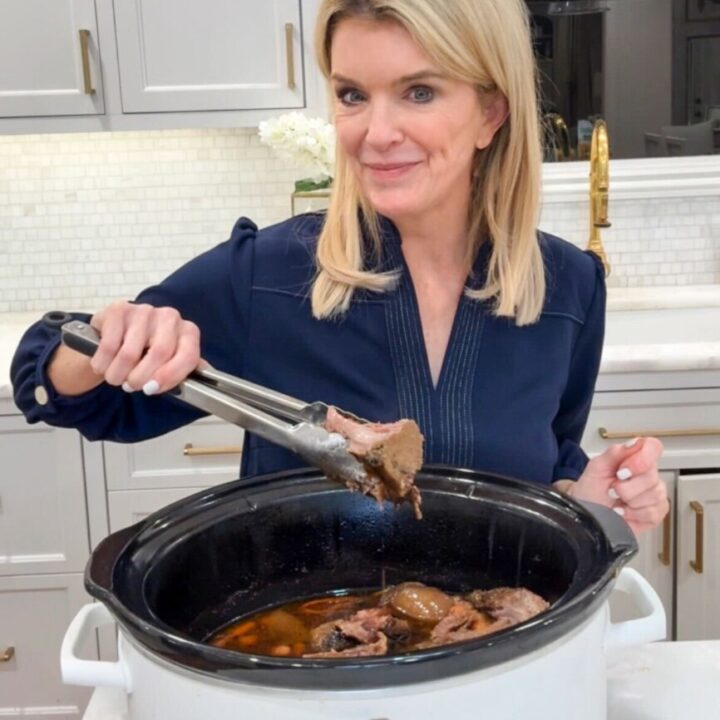
Step-by-Step Rump Roast Slow Cooker Tutorial
How do I serve a rump roast?
A rump roast is perfect for everything from a simple Sunday dinner to a holiday feast. It’s easy to dress up or keep casual, depending on the occasion. Here are a few of my favorite sides to serve alongside it:
- Southern-Style Pimento Cheese Cornbread
- Gourmet Gruyere Cheese Grits
- Mississippi Green Beans
- Boursin Potato Gratin
- Root vegetables like potatoes or sweet potatoes
It also makes for fabulous leftovers! Simply make it once and enjoy it all week. You can even use the meat for French dip sandwiches, loaded baked potatoes, tacos, nachos, and beef and gravy over mashed potatoes, making this roast a great option for easy, versatile meals.
Want more roast recipes?
If you enjoy this recipe, you may also like these:
- Mississippi Pot Roast (my most popular roast recipe)
- “Newlywed” Pot Roast with Gravy
- Balsamic Pot Roast & Roasted Vegetables
Once you try these methods, you can say goodbye to dry rump roast for good. These approaches have completely changed how I cook this cut, and I know your family will love it too.
Be blessed, and stay savvy!
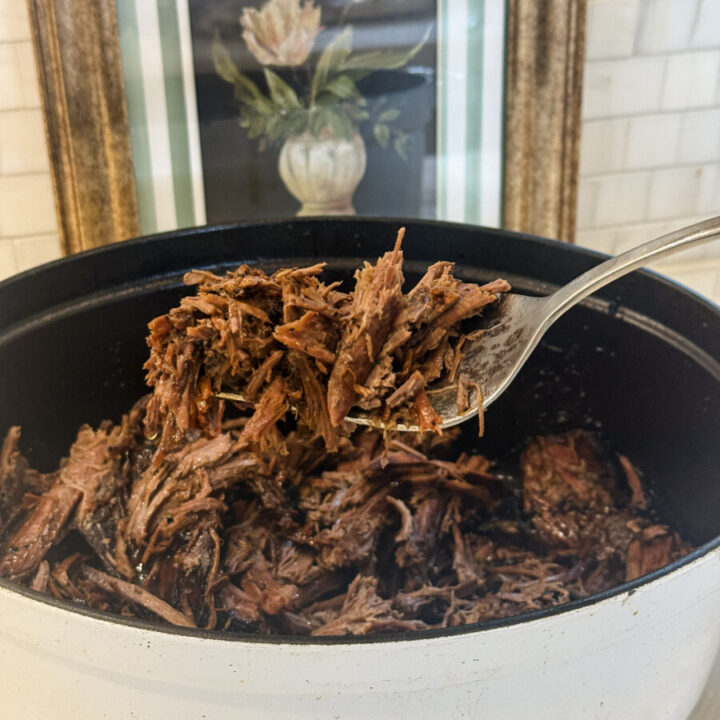
Dutch Oven Rump Roast
I tried this rump roast in the Dutch oven for the first time and I am never going back. One pot, no fuss, and the most tender, flavorful rump roast I have ever made!
Ingredients
- 1 beef rump roast (about 3–4 pounds)
- 2 cups beef bone broth
- ½ to 1 whole stick of butter, cut into pieces
- Worcestershire sauce (about 2 tablespoons, to taste)
- Redmond Wasatch Steak Seasoning (or your favorite all-purpose seasoning)
- Garlic salt (to taste)
- Extra virgin olive oil (I recommend Kosterina EVOO.)
Instructions
- Preheat your oven to 300°F.
- Add enough extra virgin olive oil to coat the bottom of a Dutch oven and heat over medium heat on the stovetop.
- Generously season all sides of the roast (including the edges) with the seasoning and garlic salt, to taste.
- Increase heat to medium-high and sear the roast in the Dutch oven, 4–5 minutes per side, until a golden crust forms on all sides and edges.
- Pour 2 cups of beef bone broth into the Dutch oven around the seared roast.
- Drizzle about 2 tablespoons of Worcestershire sauce over the roast.
- Place butter pieces on top of the roast. (A whole stick adds extra richness—highly recommend.)
- Cover the Dutch oven with its lid and transfer to the preheated oven.
- Cook at 300°F for 6–7 hours, until the meat is fork-tender.
Notes
TIP: Once your meat is cooked and shredded, pour an additional 2 cups of bone broth over the meat to keep it moist and extra flavorful.
Slow Cooker Rump Roast
Say goodbye to a dry rump roast! This recipe will help you make a flavorful, fork-tender rump roast you'll want to enjoy again and again.
Ingredients
- 1 beef rump roast (about 3–4 pounds)
- 2 cups beef bone broth
- Carrots, peeled and cut into large chunks (about 3–4)
- Potatoes, cut into large chunks (about 3–4 medium)
- Garlic & Shallot churned butter (about 3–4 tablespoons)
- Worcestershire sauce (about 1–2 tablespoons, to taste)
- Redmond seasoning (or your favorite all-purpose seasoning)
- Avocado oil (for searing)
Instructions
1. Heat a large skillet over medium heat and add enough avocado oil to lightly coat the bottom.
2. While the oil heats, generously season all sides of the roast with your seasoning, rubbing it in well (including the edges).
3. Increase heat to medium-high and add the roast to the skillet.
4. Let it sear 4–5 minutes per side without moving it, until a crust forms. Sear the edges as well. Then, remove from heat.
5. Pour 2 cups beef bone broth into the bottom of the slow cooker.
6. Place the seared roast directly into the broth.
7. Arrange the carrots and potatoes on top of the meat (this helps keep the roast sitting in the liquid).
8. Spoon 3–4 tablespoons of garlic & shallot butter over the vegetables and roast.
9. Drizzle 1–2 tablespoons Worcestershire sauce over everything.
10. Cover and cook on low for 7–8 hours, until the meat is fork-tender.


I’m so sorry this recipe didn’t turn out for you, Pauleen. I know how frustrating that is, especially with an expensive roast. Can you tell me a little more about what went wrong so I can help troubleshoot?
it sucks! I ruined a $40 roast because of this Dutch oven recipe!!!!!